
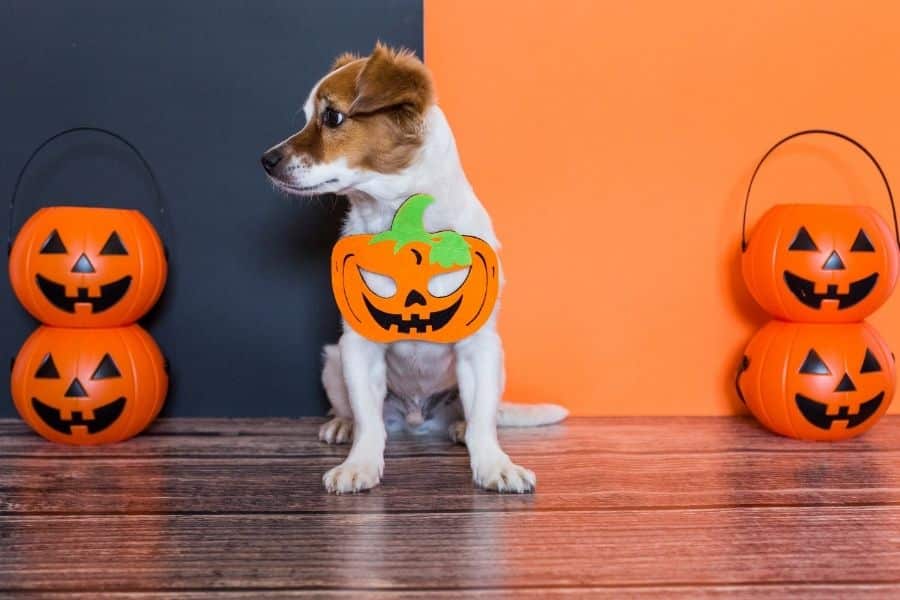
Every Halloween, thousands of pet owners face the same question: should you take dog trick or treating? It seems like a fun idea the family is going out, the dog is excited, and a costumed dog on a Halloween walk sounds like a great photo opportunity. The reality is more nuanced. Whether taking your dog trick-or-treating is a good idea depends almost entirely on your specific dog, and getting that assessment right requires honest evaluation rather than optimism. For some dogs, a Halloween evening walk is genuinely enjoyable and manageable. For many others, it is a stress event that looks like fun from the outside while being genuinely difficult for the dog on the inside. This guide gives you the vet-informed framework for making the right call, how to prepare if you do decide to go, and what to watch for throughout the evening if you bring your dog along.
Is This For Your Dog or For You?
Before any other consideration, ask yourself honestly whether bringing your dog is something your dog will enjoy or something that will make the evening more enjoyable for you. This distinction matters because the answer changes whether the decision is appropriate.
Is trick-or-treating safe for dogs? For the right dog with the right preparation, yes. For a dog who is reactive to strangers, sound-sensitive, easily overstimulated, or not fully comfortable in busy pedestrian environments, no. A dog who barks at strangers on a normal walk, who is startled by loud sounds, or who shows stress signals in crowds does not become more capable of handling those situations on Halloween night when they are present in multiplied form.
Dogs on Halloween walks risk that applies to every dog, regardless of temperament, include:
- Dropped candy on the ground that a dog can grab and swallow before the owner notices
- Glow sticks and glow bracelets dropped or discarded on sidewalks and in yards
- The repeated presentation of strangers in costumes that alter their visual and olfactory profile
- High-volume noise from groups of children, especially young children who move unpredictably
- Increased vehicle traffic in residential neighborhoods during peak trick-or-treating hours
- Escape risk if the dog is startled and pulls the leash out of the owner’s hand
These risks apply even to confident, socialized dogs. For dogs with any anxiety or reactivity, the risks are compounded significantly.
What Kind of Dog Can Handle Halloween Trick-or-Treating?
The dogs who genuinely do well on Halloween evening walks share a specific profile. Before deciding whether to bring your dog, evaluate honestly against these criteria.
A dog suited for Halloween trick-or-treating:
- Has a solid, reliable recall and stays leashed reliably without pulling
- Is genuinely comfortable with strangers in a variety of appearances, including hats, masks, and unusual clothing
- Has been in busy pedestrian environments before without showing stress signals
- Does not resource guard or lunge for food items on the ground
- Is not easily startled by sudden loud sounds or rapid movement
- Is fully current on identification: microchipped and wearing a tagged collar
A dog who should stay home:
- Has shown any reactivity toward strangers, children, or other dogs
- Is sensitive to sudden sounds or unfamiliar objects
- Pulls on the leash or is difficult to control in excited situations
- Has a history of grabbing food items from the ground
- Is a puppy under four months whose socialization window is still open and who has not had appropriate vaccinations for outdoor public exposure
- Is elderly, has joint issues, or has any health condition that makes a long evening walk inadvisable
What to watch for taking dog tricks or treating is easier to assess once you have already decided your dog meets the baseline criteria. If they do not meet the baseline, the watching-for list becomes irrelevant; the answer is to leave them home with a prepared safe room and a long-lasting treat.
How to Prepare Your Dog If You Do Decide to Go
Dog trick-or-treating preparation tips start before Halloween night, not on the day itself.
Practice with the costume. If your dog is wearing a costume, introduce it a week before Halloween. Let them sniff it, wear it briefly with positive reinforcement, and practice walking in it around the house. A costume worn for the first time in a busy Halloween environment is uncomfortable and distracting at best and creates fear responses at worst.
Pre-walk exercise earlier in the day. A thorough physical exercise session in the afternoon reduces baseline arousal before the evening begins. A well-exercised dog manages stimulation better than a dog running on pent-up energy.
Bring high-value treats. Carry small, high-value treats your dog rarely gets and use them throughout the walk for attention, check-ins, and redirection. Treats serve both as reinforcement and as a real-time measure of your dog’s stress state a dog who stops taking treats they normally love is telling you their arousal level has exceeded their working threshold.
Keep the walk shorter than you think you need to. Plan to turn around before your dog shows obvious stress signals. The goal is ending the evening on a positive note, not pushing your dog to their limit. A 30-minute walk that ends well is better than a 90-minute walk that ends with an overstimulated dog.
Walk at the edges of the activity. Dogs on Halloween walks are at risk, with the risk highest in the center of dense trick-or-treating zones. Choose routes on the periphery of the busiest areas, or walk earlier in the evening before the peak crowd arrives.
What to Watch For During the Walk
Is trick-or-treating safe for dogs you bring along? is a question you are continuously answering during the evening. These are the signs that mean the walk should end now.
Early stress signals during the walk:
- Yawning, lip licking, or sniffing the ground excessively when nothing is there
- Walking with head lowered and tail carried lower than normal
- Reluctance to approach houses or costumed people they were comfortable with earlier in the walk
Escalating stress signals:
- Panting when not physically warm or tired
- Constant scanning and hypervigilance that makes it hard to redirect attention
- Refusal of high-value treats they normally take eagerly
- Increased pulling on the leash or attempts to stop and refuse to move
Signals to end the walk immediately:
- Growling, lunging, or snapping at trick-or-treaters, other dogs, or passersby
- Trembling or inability to settle even briefly
- Attempting to bolt or pulling with unusual force
What to watch for taking dog trick or treating is ultimately a read of your dog’s cumulative stress load. Once the early signals appear and persist for several minutes without resolution, the walk has reached its useful end point. Continuing past that point increases the likelihood of a behavioral incident and sets a stressful precedent for next year.
When the Dog Stays Home: Making It Positive
For the majority of dogs, the best Halloween is one spent in a prepared safe room while the family goes out. Dog trick-or-treating preparation tips for the home-staying dog include setting up the room in advance, providing a frozen Kong or long-lasting chew, running background noise, and returning home promptly after trick-or-treating ends to resume normal evening routine.
A dog who has a calm, well-managed Halloween at home is a dog whose behavioral baseline is protected. A dog who is pushed through a stressful Halloween outing to keep them included in family activities may carry the effects of that experience into the weeks that follow.
At Cherokee Hospital for Animals, the team provides comprehensive veterinary care that includes behavioral guidance for exactly these kinds of seasonal decisions. Should you take dog trick-or-treating, it is a question with a genuinely individual answer, and we are glad to help you assess it for your specific dog. Book an appointment today.
Frequently Asked Questions
Q: At what age can puppies go trick-or-treating?
Ans: Puppies should not be taken to high-traffic public Halloween environments until they have completed their full vaccination series, which typically concludes around 16 weeks, and have had appropriate time to begin socialization with strangers and varied environments in controlled settings. The socialization window closes around 14 to 16 weeks, so the goal is controlled, positive exposure during that window rather than a large Halloween crowd that can cause negative associations.
Q: Is it safe for a dog to wear a costume during trick-or-treating?
Ans: Only if the costume fits well, does not restrict movement or breathing, has no small detachable parts, and has been introduced and practiced before Halloween night. A costume that was introduced days before the walk is dramatically less stressful for the dog than one put on for the first time at the door. Remove the costume immediately if the dog shows any sign of discomfort.
Q: What do I do if my dog grabs candy off the ground during the walk?
Ans: If your dog picks up candy before you can intervene, identify what it was if possible. If it was chocolate or any sugar-free product, contact your veterinarian or a pet poison hotline with your dog’s weight and the type of candy consumed. Do not wait for symptoms. If the candy type is unclear, call your vet for guidance. This is a situation where a prompt call is always the right move.
Q: Should I bring water for my dog on a Halloween walk?
Ans: Yes. Even in cooler October weather, a dog that is excited and active will benefit from water access, particularly if they are wearing a costume that adds any warmth or restricts airflow slightly. Bring a collapsible travel bowl and offer water periodically throughout the walk.
Q: My dog loves people. Does that mean they will be fine at Halloween?
Ans: A dog who loves people under normal circumstances is a better candidate for a Halloween walk than a reactive dog, but it is not a guarantee that the Halloween environment will be enjoyable for them. The combination of costumes, rapid unpredictable movement, dense crowds, loud sounds, and dropped food items creates a different experience than a normal social encounter. Evaluate your dog’s comfort honestly during the early part of the walk and be prepared to turn around if the signs indicate they have reached their comfortable limit.
Related Articles

