
Examinations
Annual wellness exams are a crucial element to your pet’s health.
During the visit, our veterinarians can detect potentially progressive medical issues before they become more serious and challenging to treat. For adolescent or senior pets, more frequent exams may be recommended because they have weaker immune systems that are not fully developed, and their bodies can undergo more changes in short time periods.
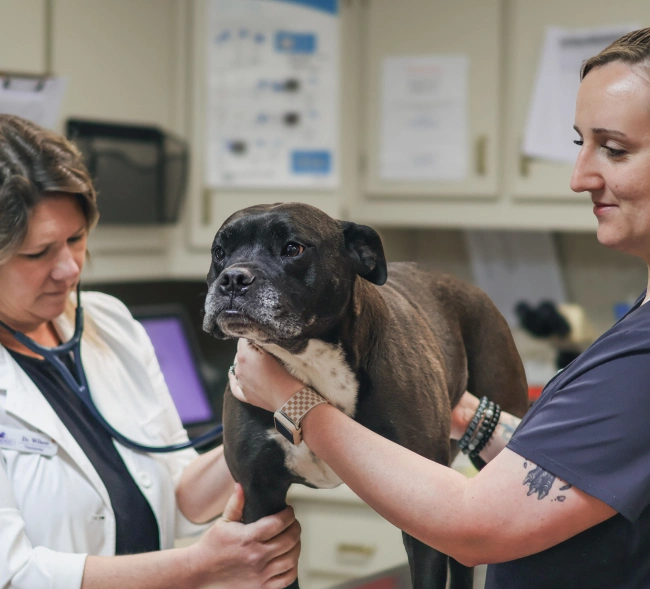
During the wellness exam, the doctor will perform a nose-to-tail physical examination where we will:
- Look inside the mouth at the gums and teeth
- Listen to the heartbeat and lungs
- Inspect the coat and skin
- Feel the joints and muscles
- Use a thermometer to take a temperature reading
- Weigh the pet
- Palpate the stomach and abdomen to feel for abnormalities
A physical examination can provide the trained eye of a veterinarian with important knowledge about your pet’s wellbeing. But even the best doctors will need to administer a few routine laboratory tests to create a complete dataset of the pet’s health.
We recommend that a fecal test is performed twice a year to ensure that your pet is free of parasites. This is one of the most common health problems that faces dogs and cats, since parasites are present in the warm Tennessee environment year round. Fortunately, parasites are easily prevented with routine testing and continuous preventative measures.
Another routine evaluation is the blood test. This test can provide a complete picture of an animal’s blood chemistry, and is recommended at least once a year. Blood tests are highly recommended for senior pets in particular.
The importance of routine veterinary visits cannot be stressed enough. Because our pets cannot tell us when they are feeling blue or under the weather, a veterinary professional must keep tabs on their health to ensure they are able to live a full, happy, and healthy life.
Vaccinations
Vaccinations are scientifically proven to prevent a myriad of potentially deadly diseases. Some vaccines even protect the public from diseases too; for example, the rabies vaccine. Rabies is therefore a legally mandated vaccine for all dogs and cats.
Vaccinations work by exposing the immune system to a small amount of the disease-causing germs of a particular malady. This gives the immune system a chance to manufacture specific antigens that can fight the disease. After this training course, if the animal is ever exposed to the disease again in the environment, their immune system will be prepared to combat infection.
Our list of core vaccinations that all pets need include:
- For Dogs: Rabies and DHPP
- For Cats: Rabies and FVRCP
Non-core vaccines may be recommended based on lifestyle and risk of exposure for certain pets. For example, dogs or cats who spend a large amount of time outside or around other animals might be candidates. Non-core vaccines include:
- For Dogs: Bordetella (kennel cough), Lyme, and Leptospirosis
- For Cats: Feline Leukemia and FIV (Feline Immunodeficiency Virus)
Most vaccines are administered annually for adult animals. Sometimes a booster may be warranted if the owner believes the animal was more likely to be exposed to a certain disease, for example if they were attacked by another animal.
Our veterinarians stay abreast of the latest scientific research on vaccines to inform their decisions about frequency and amount. If you have any questions about your our vaccine protocol regarding your pet, feel encouraged to ask one of our doctors.
Parasite Control
A parasite is any creature that lives by stealing resources from a host. When the host is your pet, they will inevitably suffer from the uncomfortable and unhealthy side effects. Some examples of parasites that commonly affect dogs and cats include fleas, ticks, heartworms, and intestinal parasites like hookworms and roundworms.
The first line of defense against these unwanted creepy crawlies is preventative care. Thanks to modern veterinary medicine, there are all sorts of preventatives including chews, topical ointments, special collars, and more. Most varieties of clinically proven preventatives are available for purchase in our pharmacy. Please ask your veterinarian for assistance picking out the perfect form of prevention for your pet based on their lifestyle, risk of exposure, and healthcare needs.
In addition to preventative medicine, we recommend fecal exams twice a year to ensure pets remain parasite free.
Grooming is another form of parasite prevention. We offer grooming services at our clinic with a professional and gentle groomer that can ensure your pet is clean and free of fleas and ticks.
Heartworms
Heartworms are parasitic worms that live in the heart, lungs, and blood vessels of infected animals. They are transmitted through the bite of an infected mosquito and can affect both dogs and cats. Heartworms can grow up to 12 inches in length and can cause serious damage to the heart, lungs, and other organs.
Microchipping
Microchipping is a simple and effective way to ensure the safety and well-being of your furry friends. It involves inserting a small microchip, about the size of a grain of rice, under the skin of your pet. This microchip contains a unique identification number that can be scanned by a veterinarian or animal shelter to retrieve your contact information. When we microchip your pet, we will submit the registration information for you, so your pet is covered the minute they walk out the door.
Nutrition & Weight Management
Your pet’s food is their fuel. In order to function at their highest level, they need to have adequate nutrition. Just like how we feel after eating junk food, this is how pet’s feel when their food does not meet their nutritional needs.Pets with chronic disease such as diabetes, cancer, thyroid disorders, allergies, and more can benefit from a prescription diet that addresses their specific health requirements.Ask your veterinarian about how your pet’s food can affect their overall health and wellness, and they can assist you by:
- Suggesting a clinically proven pet food(s)
- Offering advice about serving sizes
- Helping you select treats that are in line with your pet’s nutrition for those special times
- Creating a nutritional plan for your pet
Are You Concerned With Your Pet’s Weight?
As many as one in three dogs and cats in America are estimated to be overweight or obese. This is usually because of two reasons: the food they eat and the amount they exercise. Our veterinary doctors can assist you by helping you to assess the situation. Taking into account your pet’s height, breed standards, and age, they can tell you what their current weight really signifies. Maybe they are actually a healthy weight and their natural body composition is more robust, maybe they need to lose a few pounds, or maybe they are obese and require a major lifestyle change.
Once a professional has helped you understand where you are, they can help you get to where you need to go with nutritional plans and advice. In our store, we offer prescription pet food that has been proven to help pet’s lose or maintain their weight. If your pet is on a diet, remember to incorporate regular exercise into their routine. For dogs, this can mean longer walks or games of fetch. Many cats love to chase small toys and play games with laser pointers for exercise. Together, we can help you craft a personalized treatment plan to help your pet maintain an ideal weight.